
A rented platform is a good start. The problem comes when a brand outgrows what the platform allows - and it is not about design, it is about the logic of selling. Ombra D'oro needed stock per variant, two markets with their own prices and translations, content that says more about a garment than a table of parameters, and above all memory: the shop should remember what fitted last time. None of that could be bought as an add-on. So we built their own e-shop - and the old Upgates shop closed on 15 August 2026.
What we build in this area
- Variants by size and colour, with stock on every single item - not on the product
- Two markets from day one - Slovak and Czech, with their own prices in EUR and CZK and full translations
- A taste fingerprint - the shop learns from what the customer views, saves, buys and returns, and recommends accordingly
- Remembered size - "M fitted you last time", with the size already pre-selected
- A style guide - five questions with photos of real garments and a named style type at the end that the customer remembers
- Reminders that are not spam - when a saved item drops in price or comes back in stock
- An AI stylist for customers and an AI assistant in the admin - AI drafts texts and translations, a human always publishes them
- The story of every garment - video, a stylist's note and tags (silhouette, occasion, tone, material) you can browse the catalogue by
- A five-tier loyalty club, vouchers and showroom bookings including a styling slot
- Product feeds for Google Merchant, Glami and Meta - one entry per variant, so with the right size and colour
Why the brand left the platform
Upgates handled selling. What it did not handle was the thing that sets Ombra D'oro apart. Fashion is not sold on parameters - it is sold on the certainty that a garment will fit and the feeling that the shop understands the customer's taste. That behaviour cannot be bought as a module on a rented platform - either the shop does it or it does not.
Practical limits came on top of that. Stock at product level instead of per size and colour, the second market handled by workarounds, and the story of a garment squeezed into a description. Their own e-shop does not treat these as add-ons but as the foundation - and the brand stopped paying for the right to sell.
A move without losses
Everything moved into the new shop: 95 products, 276 variants, 537 images, articles and the order history. Old product links lead to their new garments, so traffic from Google and from campaigns never hit an error page, and order and invoice numbers continue in the original series - accounting has no gap.
What the shop does extra - the customer's side
The shop builds a taste fingerprint from what the customer does: what she views, saves to favourites, buys and returns. She fills in nothing. Category pages then highlight garments in the size that fitted last time, and the product page shows a note saying "M fitted you last time" - with that size already selected.
Anyone who wants a faster start goes through the style guide: five questions with photos of real garments and a named result at the end. The "For you" section then keeps a wardrobe of what she bought, "goes well with this" suggestions and a list of favourites including how much their price has dropped since.
The shop also gets in touch on its own, but only when there is a reason - when a saved item drops in price, when a sold-out size is back in stock, or when something arrives that completes an outfit she already owns. It is not a newsletter, it is a response to a specific thing.
The admin side
The brand runs the whole shop itself - catalogue, prices, discounts, content, orders and documents. Discounts deliberately do not stack, so no combination can eat the margin.
AI drafts the garment stories, the sorting tags and the Czech translations. A human always publishes them - AI suggests, it does not decide.
What the brand gets out of it
Instead of a monthly fee for the right to sell, they have their own system that grows in the same direction as the brand. Instead of descriptions they have content that actually says something. And instead of an anonymous catalogue they have a shop that remembers size and taste - exactly what decides whether a fashion customer comes back.
It runs on ordinary PHP hosting, with no dependency on someone else's platform and no complex technical setup. An e-shop of your own does not mean you need an IT department.
What it looks like
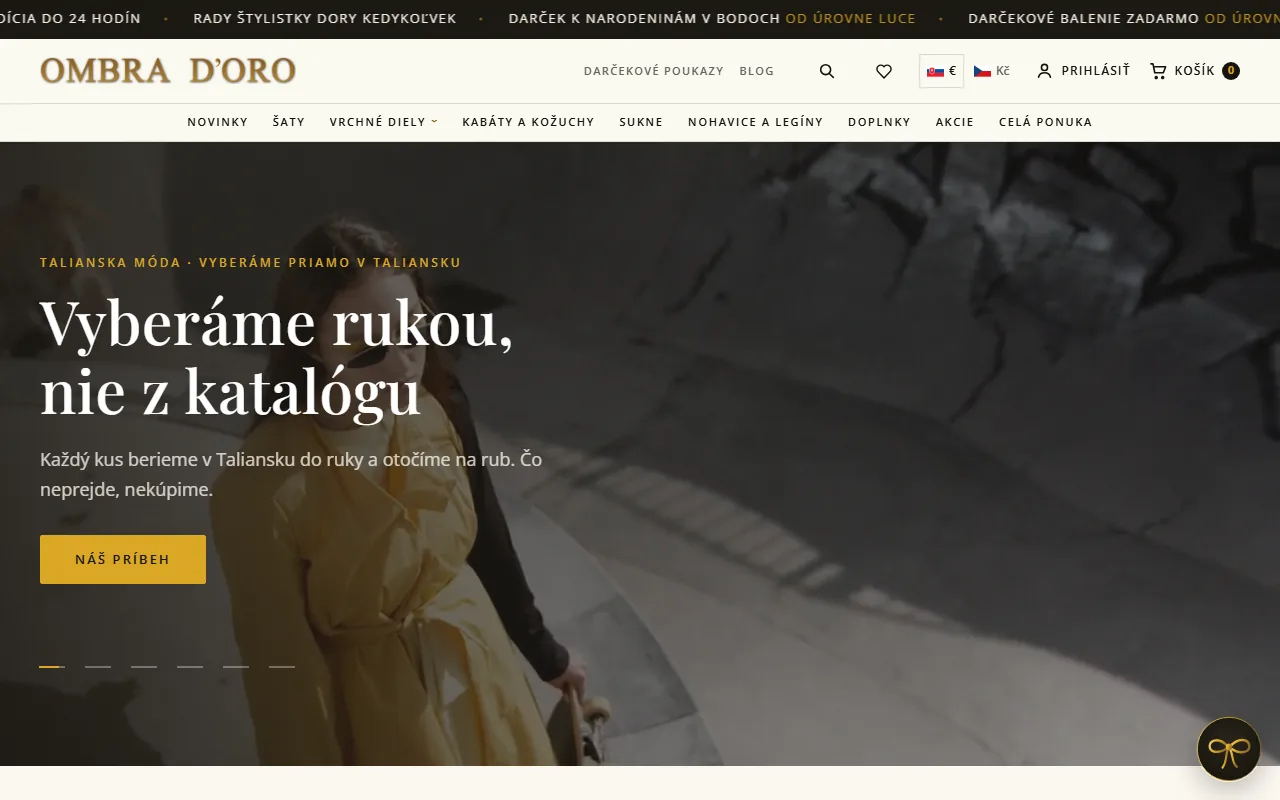
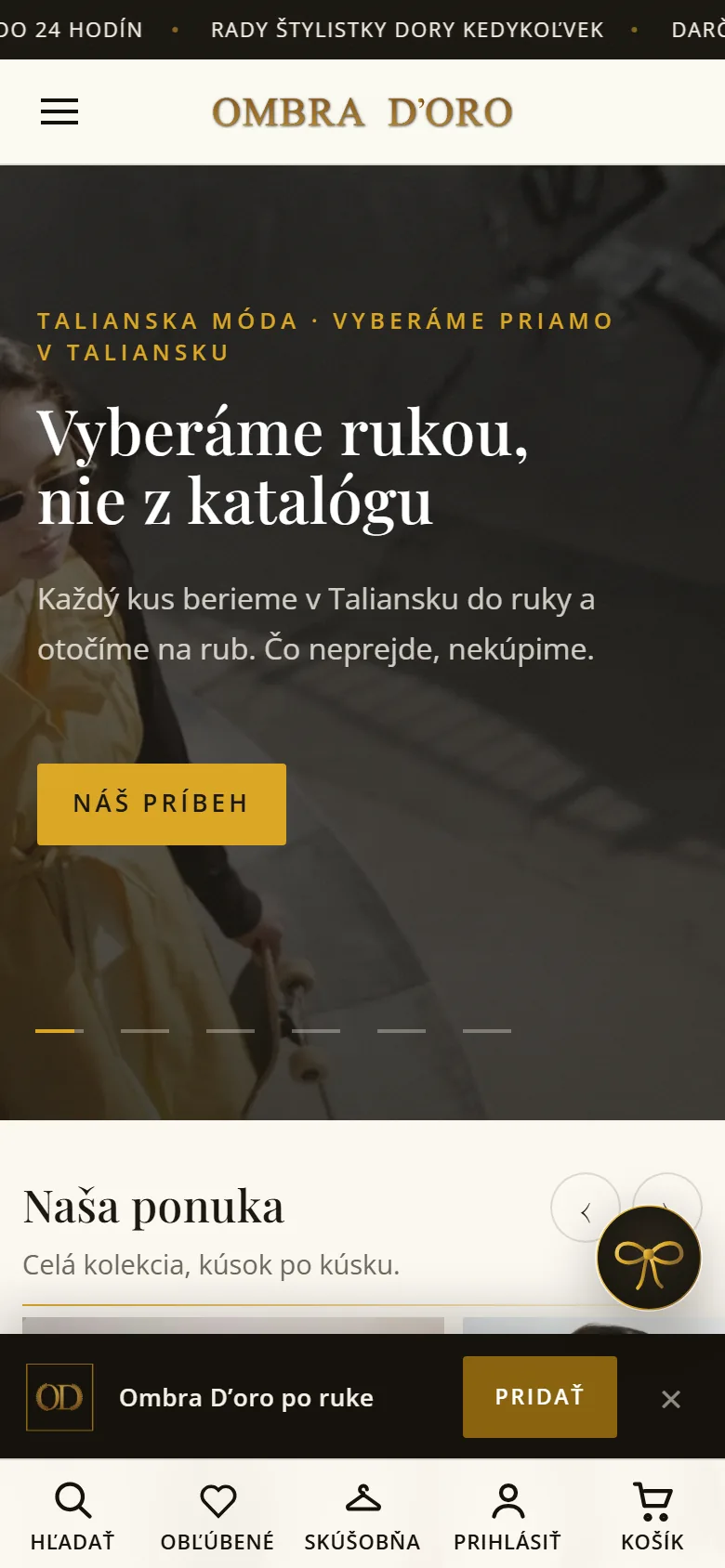
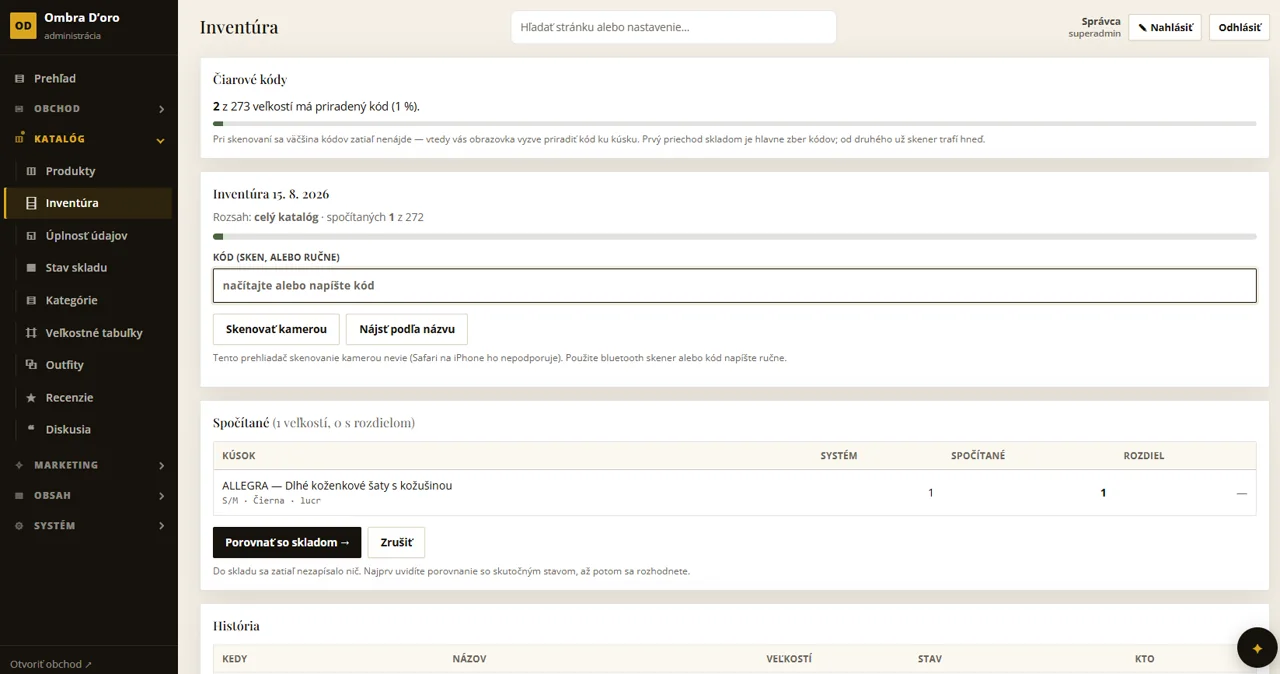
Examples from practice
Every size and colour combination has its own stock, so a customer never orders something that ends up cancelled.
From purchase and return history the shop knows which size suits whom - it marks it in the category and pre-selects it on the product page.
Google Merchant, Glami and Meta each get one entry per variant, so the ad shows a specific size and colour with real availability.
Ombra D'oro shows when leaving a rented platform pays off: not because of how it looks, but when the brand needs selling logic the platform will not sell you. The move can be done without losing traffic, history or numbering series. If you are considering the same step, let us go through it together: we will look at your current shop and tell you plainly whether moving is worth it, or whether the platform is still enough for you.
